Showing posts with label bipolar. Show all posts

Sunday, May 31, 2026

Mental Health Awareness Month: This Blog

My 2008 bipolar diagnosis suddenly made sense of all the weirdnesses floating around in my head: plunging depressions, paranoias, social anxieties, impulsive behaviors, suicidal ideation, big ideas without consequences alarms, racing thoughts, abject terror in social situations (I once had a full-on panic attack when I opened a party invitation that came in the mail) (remember getting party invitations in the mail?) …

Newly armed with a name for the collective demons I faced, I started fighting back (or at least trying to manage my world) with everything I had at my disposal—which at the beginning wasn't much because my doctor didn’t think I needed medication. So I launched into a homemade cocktail of deep breaths, internal pep talks, more-informed behaviors and decisions, reading everything I could find, looking for a new doctor who might have more powerful (i.e., pharmaceutical) tools for me to use … and the expectation that I might at any moment need to just retreat to the safety of my Chicago condo in the sky to regroup and start again the next day.

I also became self-aware enough to start being embarrassed by things I did in public … mostly bouncing around as though I were on fire, being so down I’d no-show at events I promised to attend, and in more than one instance literally running away when someone tried to introduce me to a friend.
So I did what any self-respecting writer would do: I turned to social media to start explaining myself and apologizing for being so damn weird. And to my surprise, I almost immediately started getting understanding, support … and thanks from people in similar situations for being so open about my mental illness and the challenges it brought me.

Eventually someone suggested that I start a blog to document my thoughts, feelings, experiences, and the highs and lows of my journey. So I launched TMIpolar (get it? It’s BI polar but I overshare so it’s TMI polar, which I will go to my grave thinking is one of my most clever linguistic inventions) and backfilled it with everything I’d posted and started filling it with my new adventures.

There is also a book in the works, but the prospect of organizing my thoughts into something approaching legitimate book form is so overwhelming that you shouldn’t start looking for it in bookstores until 2095.

In a weird way to think this is unfortunate, I unfortunately have been so stable in the last few years that I haven’t had much to post about any noteworthy ups and downs of my personal journey. But I’ve aggregated all my Mental Health Awareness Month essays along with other essays/thoughts/reviews/etc here for my own—along with anyone else’s—reference.

So scroll through my ramblings and even bookmark the site if you want. I’ve spent ridiculous amounts of time organizing things by keywords for your perusing convenience. And I hope it helps (or at the very least entertains) you if you find you need it.

Monday, May 25, 2026

Mental Health Awareness Month: An Unquiet Mind

An Unquiet Mind: A Memoir of Moods and Madness by Kay Redfield Jamison is a fearlessly, brutally honest 1995 memoir examining the exhilarating highs and soul-crushing lows of bipolar disorder (which was clinically called manic-depressive illness during the events of this book) from the perspective of a psychiatrist trapped in the disease. Her frank and intimately personal insights bring bipolar disorder’s cycles of terror, elation and crushing, abject despair into stark and sometimes heartbreaking clarity.

The book was recommended to me soon after I was diagnosed as bipolar in 2008, and it grabbed me on every level—from its smart writing to the recognizable, relatable, almost comforting details of its narrative—and I all but literally didn’t put the book down until I’d finished it.

I have an indelible memory of reading it on the Red Line EL train home from work one night in Chicago, and a man who’d clearly seen me reading it made sure we made eye contact as he stood up to leave and then he patted me reassuringly on the shoulder as he got off at the Sheridan stop. That encounter—a direct extension of this book—made me literally weep the rest of the way home as I was coming to grips with the label “mentally ill” and discovering the signs I’d never thought to notice until then that I wasn’t alone … and realizing that everywhere I go I’d never be alone.

If you are or love someone who is bipolar—or struggling with any mental illness—this book will make you weep, give you hope and quite possibly change your life.

Friday, May 22, 2026

Mental Health Awareness Month: Next to Normal

Next to Normal—a searing, brilliant, Pulitzer-winning rock opera examining the lives of a family whose mother is desperately struggling with bipolar depression—changed the voice of Broadway and broadened the scope of what theater can do when it opened in 2008. The show beautifully captures the swings between the ridiculous highs and the soul-crushing lows the disease brings to those of us living in its fogs and terrors ... and to the selfless teams of people who care for us.

I’m fortunate enough to have seen the original production, very soon after I’d been diagnosed as bipolar and had found myself caught in a rather terrifying struggle to wrap my confused, exhausted brain around the fact that mental illness was no longer a mysterious entity in other people’s lives; it was MY life, and I had no idea how to manage it or what potential and very real horrors to expect from it.

The musical is rough to experience from any perspective, but seeing it for the first time tore me apart ... and then put me back together with its closing anthem, “Light,” which features an almost casually placed lyric that is at once devastating and hopeful and never fails to sneak up on me and emotionally gut me even though I know it’s coming: “The price of love is loss / but still we pay / we love anyway.”

I've been invited to be the Bipolar Person in Residence and talk to the casts and audiences of Next to Normal productions at three theaters over the last decade. And while I hope it was helpful for the actors as they rehearsed and found their characters' realities, it was extremely helpful for me to have an opportunity to articulate the swings and uncertainties and terrors of living with a mental illness—both so I could explain any weirdness I've personally exhibited and to help the actors help their audiences better understand these realities.

While every bipolar mind is different and therefore every moment of Next to Normal doesn't exactly mirror my experiences, every note and every word of the show is brilliant and hits brilliantly close to home. And that closing anthem—sung by the characters not to each other but to the audience and to the present and to the future—encapsulates the struggles and hopes I live with every day in astute prose and powerful, emotional, wall-of-sound vocals:

Day after day,
We'll find the will to find our way.
Knowing that the darkest skies
Will someday see the sun.
When our long night is done,
There will be light.

Saturday, May 16, 2026

Mental Health Awareness Month: Psychotropics


Aside from being an objectively cool band name for people with mental illnesses, psychotropics is an umbrella term for the classes of drugs used to treat mental disorders and control moods, behaviors, thoughts or perceptions.


There are five categories (and multiple subcategories) of psychotropic medications: antidepressants, anti-anxiety medications, stimulants, antipsychotics and mood stabilizers. And like many of my fellow mental-illness travelers, I’ve tried damn near all of them.

Here’s a brief rundown:

ANTIDEPRESSANTS, as you might surmise, are used to treat a range of depression symptoms. They include:
  • Selective serotonin reuptake inhibitors (SSRIs), which steadily increase the amount of serotonin in your brain. Serotonin is a powerful neurotransmitter that regulates things like mood, sleep, blood clotting and even bowel movements. (Aren’t you glad you know that last part?)
  • Selective norepinephrine reuptake inhibitors (SNRIs), which gradually increase the amount of norepinephrine in your brain. Norepinephrine makes you feel awake and alert. After over a decade of trial and error, my doctor finally landed on the SNRI Fetzima as my magic bullet, and aside from a blackout-go-boom-get-concussion on the tile floor a few days after I started it, it’s been a complete game-changer for me.
  • Bupropion, which promotes important brain activity and can be used to treat seasonal affective disorder (SAD) or to help people quit smoking.
Antidepressants come with a range of frustrating side effects, including drowsiness, insomnia (how fun to have both!), constipation (more poop stuff!), weight gain, sexual issues, tremors and dry mouth.


ANTI-ANXIETY MEDICATIONS are used to treat panic attacks, phobias, generalized anxiety, and various anxiety-related symptoms.

This class of psychotropics includes beta blockers that help treat the physical symptoms of anxiety, including increased heartbeat, nausea, sweating and trembling.

Because they typically cause drowsiness, some tranquilizers and sleep medications are also used to treat anxiety and insomnia. These tend to be prescribed for only a short time to prevent dependency.

These drugs’ side effects can include nausea, blurry vision, headaches, confusion, fatigue and graphic nightmares. And oh, have I had some doozy graphic nightmares on my find-the-right-psychotropics journey.


STIMULANTS help manage unorganized behavior by improving concentration and providing a general sense of calm. They’re often prescribed for people with attention deficit hyperactivity disorder (ADHD).

Their most notable side effects include insomnia, decreased appetite and weight loss.


ANTIPSYCHOTICS help manage psychosis, which separates people’s perceptions from reality and drowns them in delusions or hallucinations.

Antipsychotics can help people with psychosis think more clearly, feel calmer, sleep better and communicate more effectively. They’re also used to treat ADHD, depression, post-traumatic stress disorder, obsessive-compulsive disorder and eating disorders.

Their side effects are primarily drowsiness, upset stomach, increased appetite and weight gain.


MOOD STABILIZERS help regulate extreme emotions. They may rob you of feeling the extreme excitement or extreme sadness that everyone experiences—which is my case—but they help manage massive bipolar swings and extreme mood swings, which is a tradeoff I’m happy to live with.

I regularly experience all their usual side effects: drowsiness, weight gain, dizziness, tremors, blurry vision and occasional confusion. I’m especially unhappy with the weight gain, but thanks to an effective mood stabilizer (in my case, the relatively common drug Lamotrigine) I can consistently and reliably participate in everyday living. Even though I have to have a damn Santa tummy to do it.


THE SIDE EFFECTS OF THESE MEDICATIONS can be powerful and overwhelming. There’s one set of side effects that present when you’re ramping up a dosage, there’s another set of side effects that come with daily use of a drug, and there’s another (often excruciating) set of side effects that come with weaning off a drug. Which is why I’ll never understand the mindset that some people get where they decide they feel fine and they’re just gonna stop taking their meds.

Wednesday, May 13, 2026

Mental Health Awareness Month: Corridor in the Asylum

Post-Impressionist painter Vincent van Gogh, who suffered the challenges of undiagnosed mental illnesses most of his life, has been posthumously diagnosed as most likely bipolar along with indicators for borderline personality disorder and epilepsy.

He was involuntarily hospitalized after he famously cut off part of his left ear in December 1888, and after he was released he eventually committed himself voluntarily to the Saint-Paul-de-Mausole psychiatric hospital in Saint-Rémy-de-Provence in late 1889.

He painted Corridor in the Asylum in September 1889 to express to his brother Theo the hopelessness, fear and despair he felt in his confinement. The long, sharply receding corridor, monotonously repetitive arches and asymmetric vanishing point capture his profound loneliness and sense of isolation that existed in stark counterpoint to the cautious optimism that had led him to this hospitalization.

Characterized by bold colors, dramatic brushwork and heightened emotional intensity, the Post-Impressionist aesthetic gave van Gogh a dynamic visual vocabulary for expressing the clouds of conflicting feelings, emotions and struggles that plagued him, and it gave him a legacy that has continued to move modern viewers for well over a century.

Van Gogh was never able to overcome his struggles with mental illness, and he by suicide on July 29, 1890.

Sunday, May 10, 2026

Mental Health Awareness Month: Mania


Mania (or being manic) is the opposite of depression in the up-and-down swings of bipolar disorder. It’s also the other half of the no-longer-used term manic depression, which was changed to bipolar disorder in the 1980 third edition of the Diagnostic and Statistical Manual of Mental Disorders (or DSM) in the interest of reducing stigmas related to the words manic and depression.

Bipolar disorder is subdivided into bipolar I (which has more extreme swings in each direction) and bipolar II (which manifests with lower levels of mania—clinically called hypomania—and deeper depressions). I’m bipolar II.

Like depression, mania can manifest itself over different lengths of time in any number or combination of symptoms, including these:
  • High, uncontrollable energy
  • Extreme, rapid talkativeness
  • Racing thoughts or flights of ideas
  • Feelings of elation or euphoria
  • Feelings of irritation or agitation
  • High distractibility and inability to focus
  • Decreased need for sleep while still feeling rested
  • Inflated self-esteem or grandiosity
  • Feeling full of great new ideas, important plans or exciting activities
  • Involvement in risky activities—like extravagant shopping, improbable commercial schemes, recreational drugs, hypersexuality—with a high likelihood of negative consequences
Some bipolar people claim they like or actually love their manic episodes. I can understand that sentiment from the perspective of having a little more energy or euphoria, but I find that anything more than that can be terrifying. And exhausting.

It’s terrifying because I know from experience I’m prone to do impulsive things with no consequences alarms going off in my head. After two decades on the bipolar coaster, I’m finally self-aware enough that I know I’m doing (or at least reminding myself not to do) those impulsive things and I need to summon the alarms myself because they won’t go off on their own. Thankfully my impulsive behaviors tend to be rather benign and fixable, like buying shoes and clothing online. But there’s always the possibility I might escalate, and who knows what my impulsive brain could be capable of.

It’s also terrifying because my manic episodes often plummet directly into the deepest of my depressive episodes. Again: I’m finally self-aware enough to know that the depressive episodes are coming and I can do what little I’m able to do to prepare for them, like canceling plans and setting out Tylenol PM to help me hopefully sleep through the worst of them.

Everyone experiences mania and depression differently—to different degrees, for different lengths of time, at different intervals and even in different environmental conditions. Neither is better or easier than the other, and both in their own way can control or disrupt your life.

You’ll probably never encounter me in a depressive state because I become immediately reclusive. But if I’m talking rapidly and visibly distracted by everything and more jittery than normal, please do your best to keep me away from the Nordstrom website. I have a pretty hefty discount. 

Monday, May 4, 2026

Mental Health Awareness Month: Bipolar Disorder

I’m starting my series of essays with something I know on a cellular level: I was diagnosed bipolar II two decades ago, and I’ve spent a lot of time since then trying to learn everything about the illness, how the medical community’s understanding of it is evolving, and how we all can work to manage it both day-to-day and long-term.

Bipolar disorder in general involves one- to two-week swings between two opposite poles of mood, energy, focus and function. The top pole is mania, which manifests itself with elation, irritability, energized behavior and lack of impulse control. People in manic episodes experience racing thoughts; an inability to focus or stay physically still; and delusions and hallucinations that can inspire irrational or risky behaviors including gambling, sexual activity and drug use without regard for what can be catastrophic consequences. 

The bottom pole is depression, which manifests itself with hopelessness, indifference and despondency. People in depressive episodes experience extreme sadness; suicidal ideation and attempts; and difficulty functioning, thinking or experiencing pleasure (which is called anhedonia).

There are three types of bipolar disorder. Bipolar I Disorder involves swings between both poles—sometimes both at once—that are so severe they can require hospitalization. Bipolar II Disorder—sometimes called bipolar depression—involves mild manic episodes (called hypomania) and often more profound depressive episodes. Cyclothymic Disorder, which isn’t as common, involves hypomanic and depressive episodes that last at least two years.

As I’ve said, I’m bipolar II, where my hypomanic episodes involve restlessness, fast (well, faster than normal) talking and thinking, and buying shoes online that I don’t need. I usually post these purchases on here to broadcast that 1) I bought awesome new shoes and 2) I’m currently hypomanic off my ass. My depressive episodes are soul-crushing in their extremity. I can’t think, I struggle to breathe, my vision is blurred, I feel like I’m wrapped in a wet wool blanket that I can’t kick my way out of, I sometimes have visual or aural hallucinations (including seeing people in black clothing lunging at me and hearing stupid, irritating circus music coming from another room), and I often contemplate suicide but I have no energy or initiative to carry it out … I generally feel like everything is completely hopeless and I just want to have never existed. And when I emerge from these episodes I’m exhausted to my core.

Bipolar disorders can be managed with psychotherapy (talking with a therapist), psychiatry (drug therapies) or a combination of both. I’ve never found much benefit from my visits with various psychologists, but I’m a HUGE believer in better living through chemistry. Psych meds (which are awesomely called psychotropics) affect me strongly, for better or worse. They involve a lot of trial and error, but I’ve been highly functional for the last seven years after finally finding a magic cocktail of three psychotropics (there’s that cool word again).

I do want to stress, though, that what works for me is indicative only of what works for ME. If you’re living with a mental illness, don’t abandon a combination of therapies that might be working for you just because someone else is thriving on a different combination of therapies. And for God’s sake, ALWAYS TAKE YOUR MEDS.

Bipolar disorders were classified as manic depression through most of the 1900s. In 1980, the third edition of the Diagnostic and Statistical Manual of Mental Disorders (called DSM-III), officially changed the classification to bipolar disorder to reflect a wider range of nuance and understanding of the disease. This paragraph is a broad generalization of the naming history, but I wanted to explain that manic depression and bipolar disorder are essentially the same thing.

There is a lot more I could discuss here, but I want to keep these essays short(er than this one) and digestible for anyone who cares to read them. Feel free to share this with anyone you think might be interested, and I hope to have another short(er than this one) essay posted soon. Stay healthy!

Wednesday, April 15, 2026

There Will Be Light

Next to Normal—a searing, brilliant, Pulitzer-winning rock opera examining the lives of a family whose mother is desperately struggling with bipolar depression—opened on Broadway 16 years ago today. The show beautifully captures the swings between the ridiculous highs and the soul-crushing lows the disease brings to those of us living in its fogs and terrors ... and to the selfless teams of people who care for us.

I’m fortunate enough to have seen the original production, very soon after I’d been diagnosed as bipolar and had found myself caught in a rather terrifying struggle to wrap my confused, exhausted brain around the fact that mental illness was no longer a mysterious entity in other people’s lives; it was MY life, and I had no idea how to manage it or what potential and very real horrors to expect from it.

The musical is rough to experience from any perspective, but seeing it for the first time tore me apart ... and then put me back together with its closing anthem, “Light,” which features an almost casually placed lyric that is at once devastating and hopeful and never fails to sneak up on me and emotionally gut me even though I know it’s coming: “The price of love is loss / but still we pay / we love anyway.”

Back when I saw the show on Broadway, selfies were new and weird and shameful—and for you young folks, it was the Middle Ages when our smartphones had cameras that faced only one way and didn’t let us see on our screens what our selfies would look like so we just had to hold our phones in the air and hope for the best—so I took this one-try selfie as quickly and discreetly as I could to ensure an entire city of complete strangers wouldn’t judge me. It turned out rather well, although I cut off the last letter of the sign. Which means as far as any of you know, I actually just saw a knockoff production called Next to Norma.

I've been invited to be the Bipolar Person in Residence and talk to the casts and audiences of Next to Normal productions at multiple theaters over the last decade. And while I hope it was helpful for the actors as they rehearsed and found their characters' realities, it was extremely helpful for me to have an opportunity to articulate the swings and uncertainties and terrors of living with a mental illness—both so I could explain any weirdness I've personally exhibited and to help the actors help their audiences better understand these realities.

While every bipolar mind is different and therefore every moment of Next to Normal doesn't exactly mirror my experiences, every note and every word of the show is brilliant and hits brilliantly close to home. And that closing anthem—sung by the characters not to each other but to the audience and to the present and to the future—encapsulates the struggles and hopes I live with every day in astute prose and powerful, emotional, wall-of-sound vocals:

Day after day,
We'll find the will to find our way.
Knowing that the darkest skies
Will someday see the sun.
When our long night is done,
There will be light.

Tuesday, December 23, 2025

Inpatient

After a year of unemployment in Chicago where I half-assedly looked for jobs and shuffled back and forth from Cedar Rapids, I more or less officially moved home eleven years ago this month.

My bipolar disorder was escalating and I was seeing what I now understand was a hack psychiatrist (because how can you know what to look for and who’s competent when you’re new at finding mental health professionals and you’re crippled by a mental illness?) who kept prescribing medication after medication (including the anticonvulsant Depakote that I had NO business being on due to its highly problematic interactions with my Lamictal mood stabilizer) without following up or even letting me know what catastrophic side effects to look for. And my unmanaged Depakote cocktail was a living nightmare of day-long blackouts, terrifying hallucinations, and sleepwalking through what was thankfully benign but could have been fatal odd behavior.

Every psychotropic drug gives you temporary—sometimes awful—side effects as you ramp up on a new prescription and wean off of it when you find out it doesn’t work. And thanks to this doctor’s random changes of drugs and cocktails, I was in a constant state of up-and-down side effects that left me miserable and confused and unable to function in a multitude of ways.

On top of all that, I was newly single and living alone for the first time in seven years, which meant I didn’t have an extra brain in the house to remind me to take that litany of changing meds on their prescribed schedules.

So by the time I decided I was moving home, I was a mess. A catastrophic, dissociative, emotional-train-crash mess.

And as Christmas drew nearer and nearer, I found myself more and more overcome with panic and dread about holding myself together through our family activities, worrying that I’d ruin them for everyone and inevitably escalating even more.

I couldn’t breathe. I couldn’t think. I couldn’t comprehend.

I didn’t want to live.

So eleven years ago today, my parents—my terrified, confused, helpless parents—and I together made the heart-wrenching decision that I needed to be hospitalized. Two days before Christmas.

The ensuing details are still hazy to me, but from what I can remember: I sobbed on our couch in Greek-tragedy emotional pain as I slowly wrapped my muddled brain around what I was about to do. Mom and Dad came with me to the emergency room. I was evaluated by a doctor. We were put in an empty holding room for four hours while they looked for an open bed, which they eventually—thankfully—found right there instead of in a hospital 200 miles away. We were taken to the mental ward where we first had to go through a room where Mom and Dad had to leave their coats and Mom had to leave her purse.

When we got in, I had to forfeit my coat and clothes and phone and basically everything but my glasses. I was given scrubs and hospital socks. I met privately with a doctor, who took me off every drug I was on and prescribed yet another new cocktail of drugs. Which meant more simultaneous ramping-up-and-down side effects.

And when I was finally done being triaged, I was given an opportunity to say goodbye to my parents and then I was escorted to my room.

I made one last look back as I was halfway down the hallway, and the looks on my parents’ faces—their anguish, fear and inconsolable sadness—will be forever seared in my memory.

And so will my feeling of complete, comforting relief from accepting the fact that all of this was bigger than I was, I could finally release the demons fighting inside me, and I was in the protective, hopefully healing care of people who could manage whatever it was that was tearing me apart.

Eleven years ago today I launched into an unknown of what ended up being a full week in a locked mental ward in a hospital.

Eleven years ago today I started yet another roller coaster of the disorienting, miserable side effects of changing medicines.

Eleven years ago today I finally knew I was safe from myself, I was being cared for by experts, and for some reason what I found to be the most important: I wouldn’t ruin my family’s Christmas. I knew that not being there would be disruptive. But I also knew that being there would have been even worse.

Eleven years ago today, I started what would still be a long, bumpy road to healing, but I knew I was at least on the road to healing. It was one of the worst things I’ve been through and one of the best things I’ve ever done.

If you’re struggling with the out-of-control pain and confusion of mental illness, please know there’s no shame in asking for help—even to the point of being hospitalized—and putting yourself in the focused care of others.

There most likely won’t be immediate healing. But there will be hope. For you, your family and your support network.

There will be calming, restorative, essential hope.

Wednesday, April 30, 2025

Part of a weird, disconcerting, sometimes terrifying world

Facebook just reminded me that nine years ago I played King Triton in a big, splashy (ahem) production of The Little Mermaid and made my first appearance onstage on a wheeled platform with a Botticelli shell and nothing to hold on to for dear life.

Oh—and my doctor and I decided that playing a principal role in a show that involved being wheeled onstage on a small, Botticelli-shelled platform was the PERFECT time to wean myseof off the demon drug Cymbalta.

If you've never been on Cymbalta, I do not recommend starting. If you've ever stopped taking Cymbalta, you know that doing it in this context was just bonkers. I was always unsure of what exact direction I could find gravity. I was in a constant state of thick, memory-clouding fog. I got what everyone coming off of Cymbalta calls "brain zaps," which is the best attempt at a collective name for an impossible-to-describe colleciton of alarming things happening in my head.

And it didn't help that practically every entrance I made began with me angrily shouting ARIEL! and then struggling to remember what came next.

I barely felt present the entire run. You might say I was notter under the water. But you shouldn't. Nobody should ever say that.

Friday, December 20, 2024

Tales from the bipolar coaster

If I've seemed moody or angry or checked out (or currently bouncing off the damn walls) to you over the last few months, I've been really struggling with more-extreme-than-usual bipolar swings ... most have which have taken me to pretty dark places.

My doctor doubled my primary SNRI antidepressant five weeks ago, which sent me spiraling into confusion, delirium and flu-like misery, so she pulled back to half-doubling it (making it just 150% instead of 200%? I'm not sure how to describe this mathly) and it's given me a sense of clarity and presence and optimism I haven't felt in literally years and years.

But it hasn't affected the downward swings. It's a net gain, but it's far from working as we'd hoped.

Anyway, I just got back from a follow-up with her, and we've decided to stay the course for the time being while my brain continues to sort out this new SNRI influx. Maybe we'll go back to the double dose (of the original dose ... again, I'm not good at mathly descriptions) in the next month or so.

But! I'm not seeing her for eight weeks instead of four, which tells me she's seeing all of this as promising.

In the mean time (and retroactively to early October), please don't take it personally if I seem uninterested or unable or unprepared or unplugged. And please don't slug me if I'm bouncing around so much that I knock your heart out of rhythm and make you spill your coffee.

But please always bring me cookies and Diet Coke. I just might give you a wan smile as a reward.

Tuesday, October 10, 2023

World Mental Health Day

Today is World Mental Health Day, an annual global event started in 1992 at the World Federation of Mental Health to promote awareness, education, understanding and advocacy for those of us suffering from mental disorders, the caregivers we sometimes desperately rely on, and the larger populations in which we live and often struggle to navigate every day of our lives.

In this spirit of awareness, education, understanding and advocacy, I'm offering here a view from inside the bipolar volcano hurricane that I wrote years ago as I was emerging from a distinctively catastrophic episode:

Sometimes being bipolar means waking up with your head covered in a gray wool blanket in the middle of a hot drenching rain and the weight of it is practically crippling but you know you're not depressed and you know you're not confused and you know you can breathe and you know you're invested in fighting your way out so you treat every blink and every word and every thought as fuel that sparks the next blink and the next word and the next thought and even though you're foggy and slow and maybe even late you're MOVING and no matter how long it takes and how hard you have to work just to achieve your minimum for now you know that it's just for now and you'll sooner than later find your way out of that hot wet scratchy gray wool blanket and you'll know from hard-fought experience that you may not have the power to make the rain go away but you have the tenacity and the fortitude to outlast it and find your clarity and focus again in the warm, restorative sunlight it was trying to hide from you and even though you're never entirely sure you know exactly what that unclouded sunlight feels like you'll always get close enough to know what you're fighting for and how to be stronger and smarter and even more certain of your indestructibility the next time.

Tuesday, June 28, 2022

The natural progression of bipolar disorder:

depression > deep depression > despondency > recovery > fogginess > exhaustion > functionality > public panic attacks > Oreos

Monday, August 23, 2021

Another crash

I was supposed to leave this morning for my annual summer vacation to visit friends in D.C. and stay at their best-porch-on-the-planet beach house in Rehoboth, DE, but I had to cancel a few weeks ago due to work issues. A lot of cool things have popped up on my calendar here in Cedar Rapids this weekend though, so I'm more or less OK with missing my trip.

But I still missed work this morning thanks to a rough descent into a bipolar depressive episode that started last night. I talk a lot about being bipolar on here, and every time I think I should stop someone messages me out of the blue to thank me for being so open and honest about it. Enough people have confided in me the stories of their struggles with mental illness that I sometimes worry I won't remember everyone in my mental checklist of kindred, struggling spirits. I've developed close, supportive friendships with a lot of these people though, and our check-ins and conversations and even drives across town just to give hugs are so dear and so valuable to me that I'll probably never stop talking about my own struggles.

So here's this morning's report: I woke up at 6:00 in a motivational black hole with a fiery headache and enough disorientation that I knew enough to skip the gym—which is huge because some days working out is the only thing that keeps me human—and to let my boss know that I'd come in after lunch, if at all today. Then I went back to the kind of non-sleep that feels like you're staying awake getting more and more exhausted compounded by the stress of feeling worried about getting more and more exhausted. But when I woke up around 11:00 my head was clear enough that I could look at the episode objectively and summon the coping and pushing-through skills I've learned over the last decade and I showered and ate and made it to work, where I've been surprisingly productive ... albeit profoundly exhausted.

So to all the people I know who are dealing with mental illness and to all the people I don't know who are dealing with mental illness and to all the rest of you curious enough about my struggles today to have read this far: You will fight this battle all your life. You will get meds that don't work, you will get meds that actually make things worse and you will find meds that you'll notice start to make improvements ... though you'll spend ages waiting cynically for them to fail you. In the mean time, learn what helps you stabilize yourself and what helps you push your way out of the wet wool blankets and the rolling fogs that trap you. As soon as I felt coherent this morning, I texted one friend who right now is in a bottomless depressive episode so we could both not feel alone in our struggles and I texted another friend who as far as I know is not having an episode just so I'd know that someone who deeply understands what I'm going through is at the very least thinking about me. And then I picked out a shirt that says carpe diem on it and I know that it's totally goofy bordering on stupid, but if I'm wearing a shirt that means something to me on a certain day or in a certain situation, I feel compelled to go out in the world and show it to everybody.

And after what my head put me through this morning, I need everyone to know—no, I need to SHOW everyone—that I'm seizing the hell out of the rest of my today.

Wednesday, October 28, 2020

Some people get MBAs. Or MSWs. Or Mrs.'s.

I just got an MRI. And I have the MRI hair to prove it.
My choking-cigarette-smoke olfactory hallucinations are now in their sixth straight sold-out week, so my neurologist ordered an MRI to see if I might be experiencing seizures. And since I was a bit overdue for my every-other-year MRI to monitor a benign adenoma tumor on my pituitary, my GP ordered one for that as well.

For those of you keeping score at home, that's two MRIs for the price of one Richter-scale bedhead.

And hoo-boy has the MRI spa experience improved in the last two years. Instead of being immobilized in a claustrophobic head cage and jammed full-body into the super-duper-claustrophobic MRI oven that clanks and screams at you like you're about to be devoured by robot ghosts, this time I was given noise-almost-canceling headphones with my choice of music (they cruelly didn't have a Broadway option, which is just rude) under my claustrophobic head cage and I was rolled into the oven only to my shoulders, which allowed a welcome sense of light and air circulation.

Side note: The top of the oven hole that I was rolled into was made of pale plastic molded with two ridged arcs that curved in from the sides and swooped down to meet in the middle and disappear at the bottom. And when you stare at them for over an hour as terrifying robot ghosts clank and scream in your ears, they start to look like ... well ... um ... a hoo-hoo. And once you see an abstract hoo-hoo arcing gracefully mere inches from your face, you totally can't UNsee it. So it's fair to say that I've had more than my fair share of molded abstract hoo-hoo for the day. Or the week. Or the decade.

When the guy who locked me in the claustrophobic head cage and rolled me into the MRI clanking-and-screaming-robot-ghost oven told me that Broadway wasn't an option for my musical distractions, I—in a pique of fluster—blurted out the obvious second choice for a Broadway lover: '70s rock. I have NO idea why I said that, other than the fact that I like The Eagles and "Little Willy" (the SONG, ya perverts), but the genre's stentorian guitar shredding and growled, node-guaranteeing singing ended up making an arguably better robot-ghost-clanking-and-screaming cover-up than "She Used to be Mine" or "Finishing the Hat."

Side note: When you're immobilized in a cage with a molded abstract hoo-hoo glaring in your face and an endless parade of '70s rock anthems you've never heard before blaring in your ears, you have to think of SOMETHING to pass the time. So you inevitably find yourself listening intently and trying to catalog the form and structure of each song.

Cliff's Notes: The '70s were clearly a period of unbridled musical creativity and innovation, because not a single song is written in AABA form. Not even "Old Time Rock and Roll," despite its UNAMBIGUOUSLY STATED allegiance to the AABA Golden Age. Thanks for nothing, Bob Deceiveger.

Medical-stuff conclusion: There is a measurably common—though not necessarily causal—relationship between mental illness and pituitary tumors. Which is one reason we monitor my adenoma every two years with an MRI to see if it's growing or in any way changing. There is also an objectively cruel relationship between my bipolar-meds-induced tardive dyskenesia—a permanent neurological disorder that causes LOTS of involuntary muscle movement—and my regular MRIs that require me to LIE THE FUCK STILL FOR OVER AN HOUR and hold all that twitching in. It's exhausting, which is why I always take a PTO day to recover when I have an MRI.

And to tame my damn bedhead.

Wednesday, September 30, 2020

So I've started writing this mental-health blog ...

Actually, so far I've just been retrofitting it with posts I've made on Facebook and my older blog over the last decade. And there are hundreds more posts buried away in my social-media attics and basements that I want to find and repost here to create a more robust picture of my personal experiences with and observations about bipolar depression.

Unless I have a massive episode or interesting experience to write about, I'll probably focus my efforts here on digging up and reposting older posts, essays, reviews and ruminations for a while. So if you decide to come back, poke around in the labels and archives scrolling down the column to your right to find new old stuff to read.

Getting this blog up and running and filled with (hopefully) meaningful mental-health content is very much a work in progress, and I hope every time you return you find something helpful or interesting or occasionally entertaining.

And I also hope you share the URL far and wide. We bipolar depressives need our validation. And I have dreams of getting a book deal. And eventually a sitcom and a line of action figures. So copy and paste this with wild abandon:

TMIpolar.blogspot.com

Stay healthy and be well!

Monday, September 28, 2020

The tenacity and the fortitude

Sometimes being bipolar means waking up with your head covered in a gray wool blanket in the middle of a hot drenching rain and the weight of it is practically crippling but you know you're not depressed and you know you're not confused and you know you can breathe and you know you're invested in fighting your way out so you treat every blink and every word and every thought as fuel that sparks the next blink and the next word and the next thought and even though you're foggy and slow and maybe even late you're MOVING and no matter how long it takes and how hard you have to work just to achieve your minimum for now you know that it's just for now and you'll sooner than later find your way out of that hot wet scratchy gray wool blanket and you'll know from hard-fought experience that you may not have the power to make the rain go away but you have the tenacity and the fortitude to outlast it and find your clarity and focus again in the warm, restorative sunlight it was trying to hide from you and even though you're never entirely sure you know exactly what that unclouded sunlight feels like you'll always get close enough to know what you're fighting for and how to be stronger and smarter and even more certain of your indestructibility the next time.

Thursday, September 24, 2020

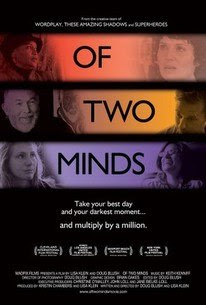
Of Two Minds

I stumbled on this documentary about bipolar disorder last night on Amazon Prime, and it is so well done that I didn't even pick up my phone as I watched it. Which says A LOT.

The film follows the lives of four people living with bipolar disorder for over a year and veers off once in a while to profile a handful of others, which I think leaves viewers with a robust understanding of the commonalities bipolar people all deal with but really underscores the fact that no two people's experiences are the same. Some people (like me) have hallucinations, some cut themselves, some find manic episodes to be thrilling, some (like me) find them scary and exhausting, some experience functional depression, some (like me) fall into depression so deep that it's past the point of functioning and therefore safely past the point of being capable of self-harm, some attempt and eventually succeed at suicide, some hate taking meds and even refuse to fill their prescriptions, and some (like me) can never forget how awful it is to be off our meds and therefore take them religiously.

The people profiled are straight, gay and bisexual. Some are religious and some are atheists. Some have money and some are struggling so much that they can't afford their meds and rent and seriously consider leaving the United States for a country that can offer them healthcare. They live in cities all over North America. The documentary really does a deep dive into the environments and experiences that shape the way people manage their mental health—though my only criticism is that there are only three people of color, all of whom are just one-off side interviews, which I think really misses an opportunity to paint a more robust picture of experiences and contexts and cultures and personal decisions.

It's edited deftly to be thorough and intimately informational but not overwhelming. I was left feeling emotionally connected to everyone—to the point that I rooted for all of them but ended up angry at one person and genuinely disliking another.

If you or someone you love is living (or struggling) with bipolar disorder, I highly recommend watching this. It's quite beautiful.

Wednesday, April 15, 2020

We love anyway

Next to Normal—a searing, brilliant, Pulitzer-winning rock opera examining the lives of a family whose mother is profoundly struggling with bipolar depression—opened on Broadway 11 years ago today. The show beautifully captures the swings between the ridiculous highs and the soul-crushing lows the disease brings to those of us living in its fogs and terrors ... and to the selfless teams of people who care for us.

I’m fortunate enough to have seen the original production, very soon after I’d been diagnosed as bipolar and had found myself caught in a rather terrifying struggle to wrap my confused, exhausted brain around the fact that mental illness was no longer a mysterious entity in other people’s lives; it was MY life, and I had no idea how to manage it or what potential and very real horrors to expect from it.

The musical is rough to experience from any perspective, but seeing it for the first time tore me apart ... and then put me back together with its closing anthem, “Light,” which features an almost casually placed lyric that is at once devastating and hopeful and never fails to sneak up on me and emotionally gut me even though I know it’s coming: “The price of love is loss / but still we pay / we love anyway.”

Back when I saw the show on Broadway, selfies were new and weird and shameful—and for you young folks, it was the Middle Ages when our smartphones had cameras that faced only one way and didn’t let us see on our screens what our selfies would look like so we just had to hold our phones in the air and hope for the best—so I took this one-try selfie as quickly and discreetly as I could to ensure an entire city of complete strangers wouldn’t judge me. It turned out rather well, although I cut off the last letter of the sign. Which means as far as any of you know, I actually just saw a knockoff production called Next to Norma.

I've been invited to be the Bipolar in Residence and talk to the casts of Next to Normal productions at a number of local theaters over the last few years. And while I hope it was helpful for the actors as they rehearsed and found their characters' realities, it was extremely helpful for me to have an opportunity to articulate the swings and uncertainties and terrors of living with a mental illness—both so I could explain any weirdness I've personally exhibited and to help the actors help their audiences better understand these realities.

While every bipolar mind is different and therefore every moment of Next to Normal doesn't exactly mirror my experiences, every note and every word of the show is brilliant. And that closing anthem—sung by the characters not to each other but to the audience and to the present and to the future—encapsulates the struggles and hopes I live with every day in astute prose and powerful, emotional, wall-of-sound vocals:

Day after day,
We'll find the will to find our way.
Knowing that the darkest skies
Will someday see the sun.
When our long night is done,
There will be light.

Tuesday, January 21, 2020

BOOT EDGE EDGE!

Pete Buttigieg had another town-hall rally in Cedar Rapids tonight, where he continued to inspire and enthrall and impress the hell out of a packed room of supporters and still-undecided caucusers. His messages of big-tent inclusivity and his standards of decency and his unfailingly measured and principled and educated policy proposals shaped more than his well-rehearsed stump speech; they drove thoughtful, meaningful answers to audience questions drawn randomly from a literal fishbowl in front of everyone. Pete doesn’t just talk for the sake of talking—he has things to say that he’s clearly thought about and taken the time to research and understand and make informed opinions about.

Issues related to mental illness—and caring for people with mental illnesses—came up more than once over the course of the evening, and amid discussions of stigma and a lack of available care and his loan-forgiveness proposals to draw more people into the field, he specifically mentioned bipolar disorder. I was sitting with my dad in the ADA section, wedged between him with his cane and a stranger with hers. My tardive dyskinesia—a permanent tremor disorder brought on by my bipolar meds—happened to be firing on all cylinders tonight, and as I was struggling mightily to sit still and not bounce like an earthquake and jostle everyone wedged around me, my chosen candidate—the measured, educated, thoughtful, egalitarian, inspiring, openly gay, perpetual adult in the room—specifically mentioned ME and my struggles and my family’s struggles ... and he had solid, workable ideas for addressing them for everyone living with our struggles.

And though my meds have also pretty much neutered my emotions and left me virtually unable to cry, I found myself repeatedly choking back tears.

If you’re undecided or overwhelmed or even underwhelmed by the field of Democratic candidates, reach out to me. I’m more than happy to share with you why I find Pete Buttigieg so inspiring and important and eminently capable of leading us all as a citizenry and as a country.

Ideations

I’m not being dramatic when I say I came within inches of dying violently yesterday. I was driving home on Highway 30 when I suddenly realiz...